
Last updated November 15, 2026
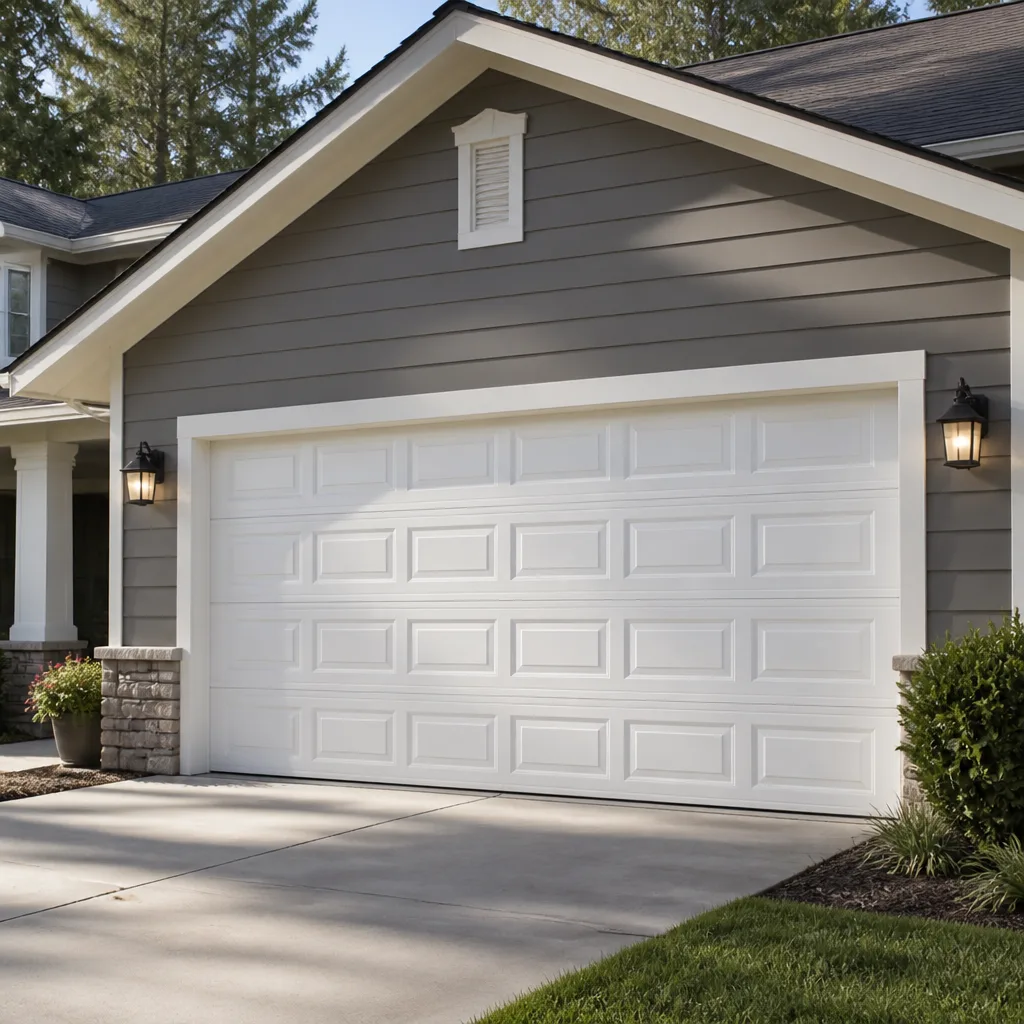 Raised-panel steel
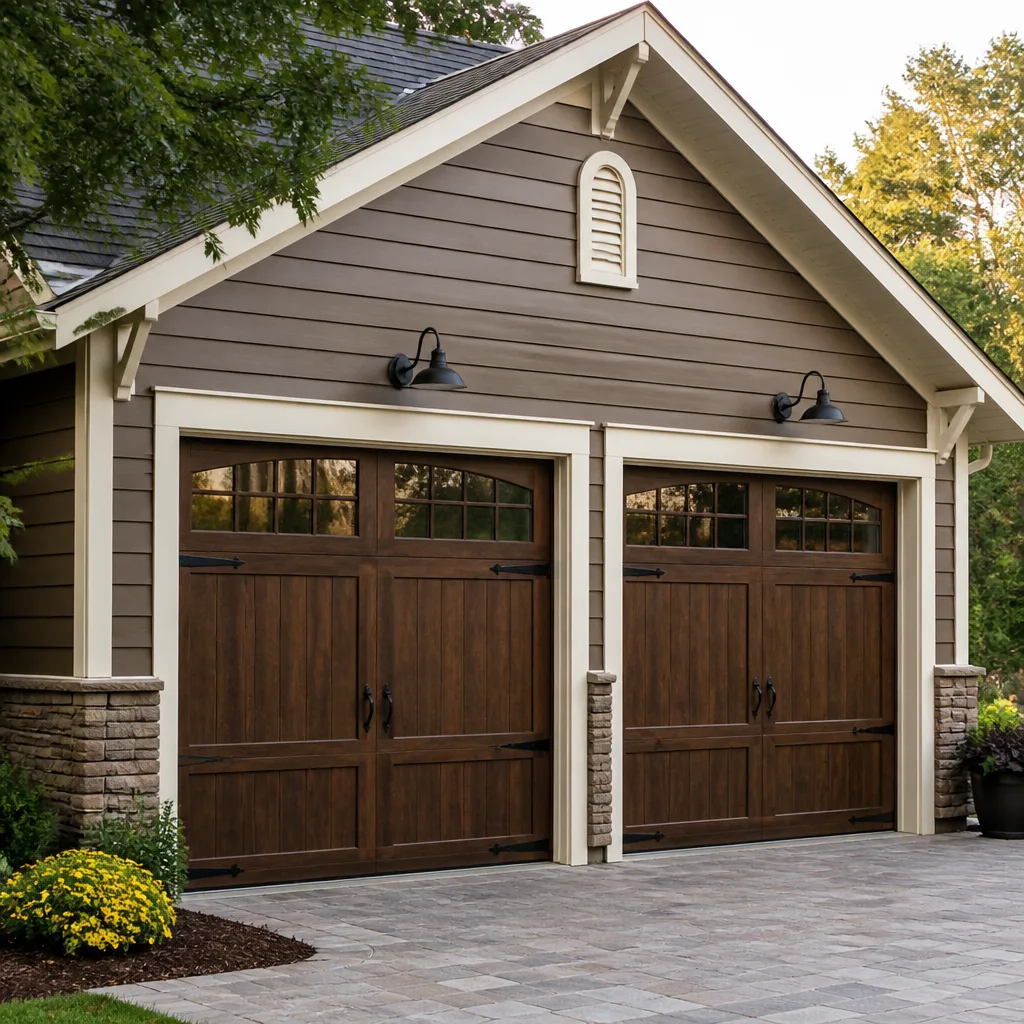 Carriage house
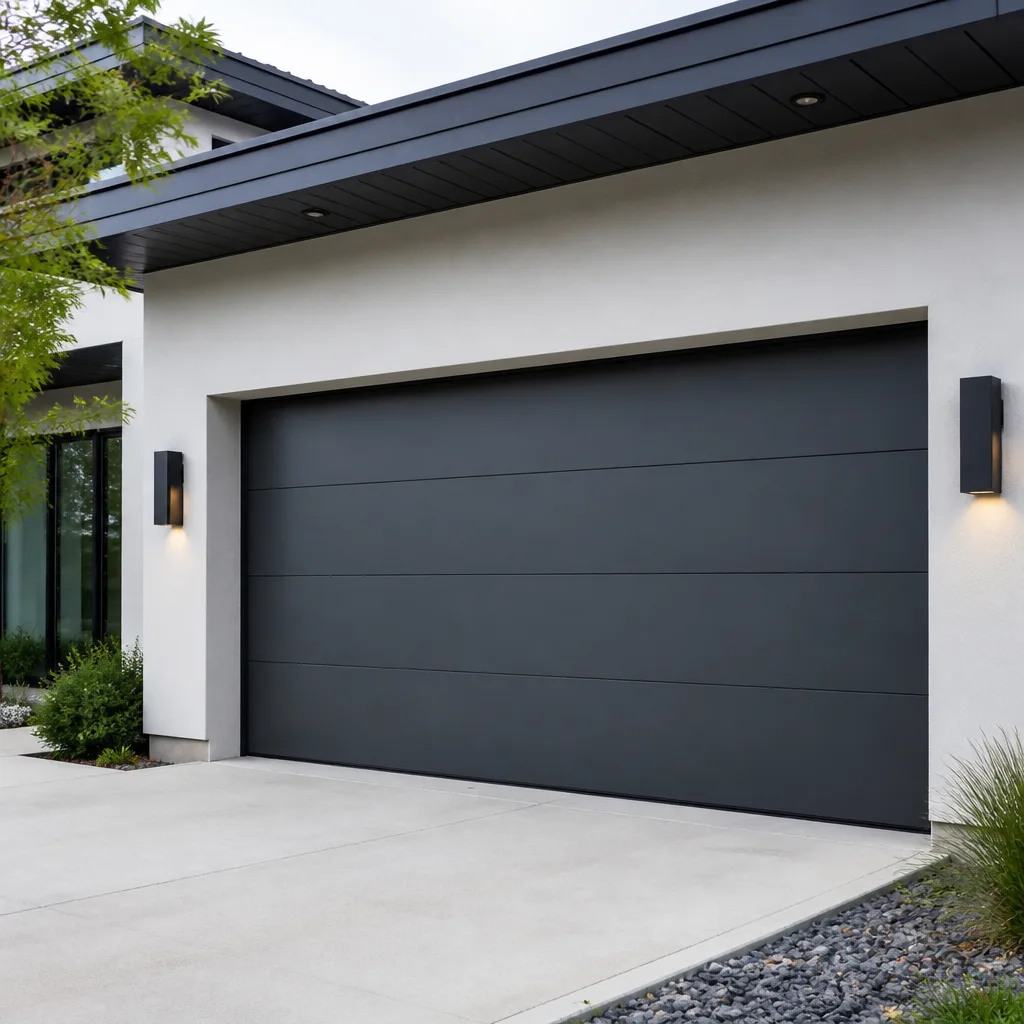 Modern flush
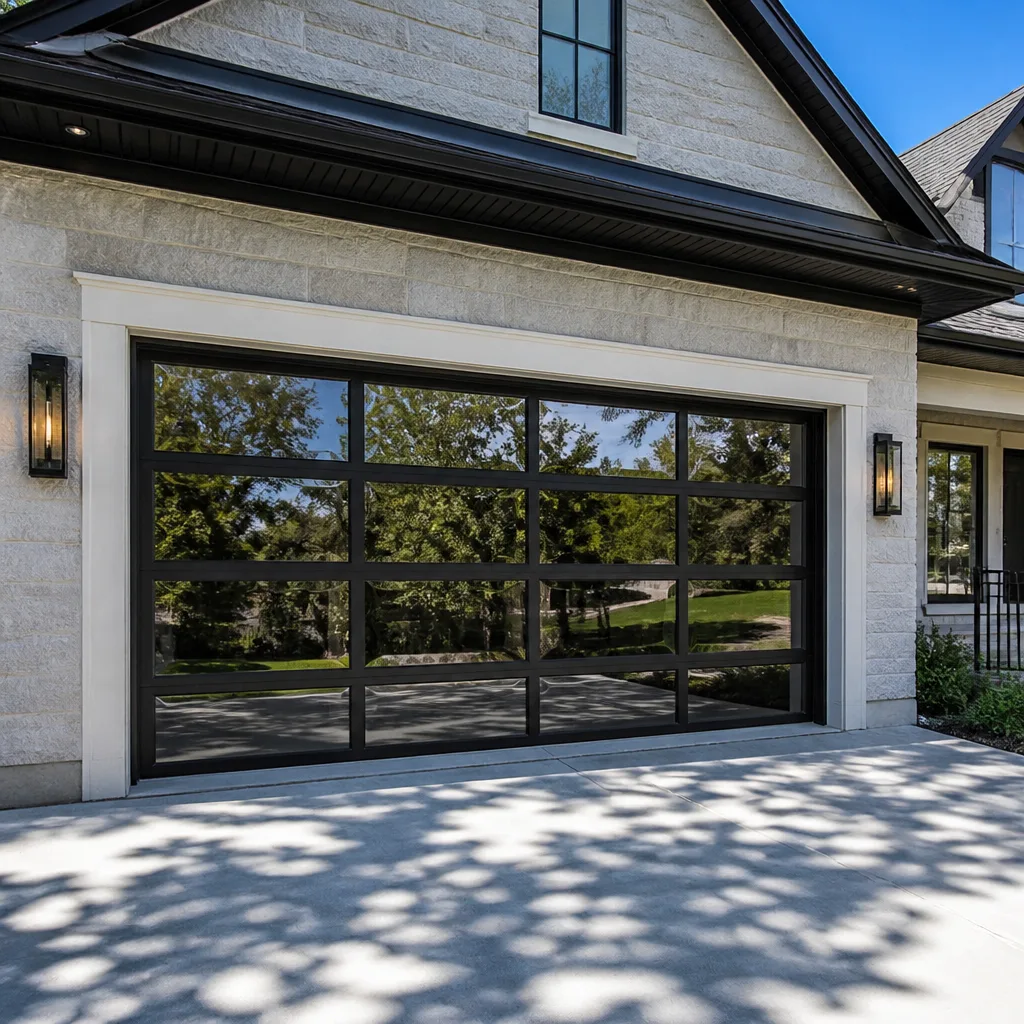 Full-view glass
 LiftMaster openers
 Chamberlain openers
Full 25-point door and opener safety check with every visit - springs, cables, rollers, tracks, and your LiftMaster or Chamberlain opener included
You get a price before we start. It does not change when the pro arrives.
Get your free estimateGarage Door Emergency Preparedness Guide for Norfolk Homes
Most Norfolk homeowners treat a garage door emergency as a repair problem. The better way to see it is as a readiness problem. The failure that strands your car, lets water into the garage, or blocks your way out during a storm is almost always the same door that gave small warnings for weeks and nobody tested the manual release. During Hurricane Dorian’s approach in 2019, calls for emergency garage door service in coastal Virginia spiked in the 24 hours before landfall, and most of those calls were for failures a 10-minute manual override test would have caught beforehand. This guide covers the scenarios Norfolk actually faces: a door that won’t seal before a tropical system, a door that won’t open after a power outage with the car inside, and a door that fails in the middle of an evacuation window. You’ll learn how to release any common opener by hand, what to check before a storm, how to free a stuck door without wrecking it, and which damage can wait versus which makes a door unsafe to run.
Quick Answer
A garage door emergency in Norfolk usually comes down to three things: knowing how to release the door from the opener by hand, checking and bracing the door before a storm rather than during one, and knowing which failures you can safely reset yourself versus which require a trained technician. Springs, cables, and the torsion assembly are under extreme tension and are never a DIY job. The rest – manual release, locking the door, clearing obstructions, checking the safety sensors – you can absolutely prepare for. Prepare the mechanical basics now, and the actual emergency becomes a controlled 20 minutes instead of a panic.
Styles & brands we work with
- Raised-panel steel
- Carriage house
- Modern flush
- Full-view glass
- LiftMaster openers
- Chamberlain openers
Table of Contents
- How to Use Your Manual Release, Every Opener Type
- Pre-Storm Protocol for Norfolk Homes
- Door Stuck Mid-Travel With a Car Inside
- What to Tell a Repair Service When You Call
- Post-Storm Damage Assessment
- Power Outage and Evacuation Readiness
- Common Mistakes to Avoid
- When to Call a Professional
How to Use Your Manual Release, Every Opener Type
The single most important thing you can rehearse before an emergency is the manual release. It’s the whole point of the mechanism: it disconnects the door from the opener so you can lift the door by hand. Most openers – LiftMaster, Chamberlain, Craftsman, Genie – use a pull cord with a handle hanging from the trolley on the rail. Some older or light-commercial units use a different release, and a few use an external keyed release if your door has no direct walk-in access. Here’s how each one works.
Standard pull-cord release (most home openers)
- Pull the cord straight down toward the floor. You’ll hear and feel the trolley disengage from the carriage.
- Lift the door slowly by hand. A properly balanced door should open with steady, moderate effort.
- Do not yank the cord at an angle – pull straight down. Angled pulls are how the release arm bends.
- To reconnect, run the opener so the carriage meets the trolley, then pull the cord toward the door to re-engage. Or use the opener’s engage position per your manual.
External keyed release (no walk-in door)
If your garage has no pedestrian door, a keyed release mounted outside lets you disengage the opener from outside. Insert the key, turn, and pull the cable. The door then lifts by hand. Test that the key still turns before storm season – a seized lock cylinder is useless when you need it.
Release from inside when the door is the only exit
If a car is trapped and the opener won’t respond, the release is your way out. Pull the cord, lift the door by hand to clear the vehicle, and move the car out before you do anything else. If the door won’t lift by hand, that’s a mechanical failure – a broken spring or a jumped cable – and no amount of opener fiddling will fix it. Stop pulling and get help.
A door that has to be lifted by hand with the opener disengaged and feels extremely heavy is not balanced. Don’t force it. That’s a sign of a spring or cable problem, and those parts are under enough tension to injure you. This is exactly the kind of failure where a trained technician is the right call, and where brand familiarity matters – the technician who arrives already knowing your Clopay door and its hardware gets to the fix faster than someone learning it on your driveway.
Pre-Storm Protocol for Norfolk Homes
Norfolk sits where tropical systems and nor’easters both show up, and a garage door is one of the few large openings on a house that can fail in wind, admit water, or both. The time to check the door is days before a system arrives, not the afternoon it makes landfall. Here’s the sequence we’d suggest for a Norfolk home when a storm is forecast.
- Run the door through a full open-close cycle and listen. Grinding, popping, or a door that reverses on its own is a warning sign. Note it and get it looked at before the storm window.
- Check the bottom seal. Run a hand along the bottom edge with the door closed. A seal that’s cracked, torn, or not making contact lets wind-driven rain under the door. A worn seal is a cheap, easy fix compared to water in the garage.
- Test the manual release. Disengage the opener, lift the door by hand, and re-engage. If it doesn’t release cleanly or the door is too heavy to lift, that’s a repair, not a preparation.
- Check the weatherstripping and perimeter seals around the frame. Gaps are where wind pressure and water get in.
- Clear the tracks and the floor. Debris in the track or under the door causes the opener to strain or reverse under load.
- Confirm the safety sensors are aligned. A misaligned sensor on a stormy day will stop the door from closing, and that’s the last thing you need while you’re trying to seal up.
- Decide whether to disconnect the opener. If you’re going to be away, or if you expect an extended power outage, disengaging the opener and locking the door manually means a storm-induced power surge can’t attempt to cycle the door. Reconnect when the system has passed.
Most of these are visual checks and a few minutes of listening. None of them require tools. What they do require is doing them before the forecast turns from “watch” to “warning.” If a check turns up something you can’t handle – a heavy door, a broken spring, a frayed cable – call it in early. Scheduling a garage door repair in the quiet before a storm is a lot easier than finding someone during the crush.
Door Stuck Mid-Travel With a Car Inside
A door that stops halfway with the car inside is a specific kind of stuck, and the safe sequence is different from a door that simply won’t open. The goal is to free the car without damaging the door, the opener, or the tracks. Resist the urge to force the door or keep hitting the opener button – that’s how a small problem becomes a bent panel and a stripped gear.
The safe sequence
- Stop operating the opener. Repeatedly pressing the button on a jammed door burns out the motor or strips the drive gear. Let it rest.
- Look before you lift. Check the tracks for anything in the way, and check whether the door is crooked – one side higher than the other. A crooked door means a cable or spring problem, and lifting it by hand can make it worse.
- Pull the manual release if the door is straight and the tracks are clear. Lift the door slowly by hand to clear the vehicle.
- Move the car out first. Once the car is clear, you can assess the door without the pressure of being blocked in.
- Lower the door by hand if the opener is still disconnected, or reconnect and let the opener bring it down if the door moves freely. Do not force a heavy door down.
- Call for repair. A door that stopped mid-travel has a reason – a failing spring, a slipping gear, a bent track, a limit switch out of adjustment – and that reason needs diagnosis.
If the door is crooked, the tracks are visibly bent, or the door won’t move by hand, don’t fight it. Those are signs of a load-bearing part failure, and the safe move is to leave the door where it is and get a technician out. Our technicians have up to 13 years of experience and work on the full range of door and opener systems, so they can diagnose whether it’s the door hardware, the opener, or the drive system that failed.
What to Tell a Repair Service When You Call
The quality of the help you get depends a lot on what you tell the person on the phone. A vague call (“my garage door is broken”) leads to a vague visit. A precise call gets a technician who arrives with the right parts and a realistic plan. Here’s what to have ready when you call, whether it’s mid-day or the middle of the night.
- The brand of your door and opener. Knowing it’s a Wayne Dalton door on a Chamberlain opener tells us what we’re likely dealing with. This is where brand familiarity saves time – we’re factory-familiar with LiftMaster, Chamberlain, Genie, Clopay, Amarr, Wayne Dalton, Craftsman, and Raynor, so the brand tells the technician a lot before they arrive.
- What the door did. “It stopped halfway,” “it went up crooked,” “it opened and won’t close,” “I heard a bang and it won’t lift.” Each one points to a different failure.
- Whether a car is trapped. Say so first. It changes the urgency.
- Whether the opener runs at all. A motor that hums but doesn’t move the door is different from one that’s completely dead. Listen before you call.
- Whether the door is safe to leave as-is. If it’s stuck open, say so – that’s a security and water concern overnight.
- Your address and gate or access details. Small thing, saves a lot of time on arrival.
One more thing: the price is quoted and agreed before any work starts. You’ll get a written estimate before a technician touches the door, so you’re never surprised by the invoice. When you call, we answer 24/7 and dispatch technicians from 7am to 7pm, Sunday through Friday.
Post-Storm Damage Assessment
After a storm passes, the first instinct is to hit the opener button and see if everything still works. Resist that for a moment. Some damage is cosmetic and can wait; some makes the door unsafe to operate, and running it could turn a repair into a replacement. Here’s how to tell which is which.
Safe to operate, or at least safe to assess
- Debris in the tracks or on the floor. Clear it, then test the door slowly.
- A door that’s off its seal but otherwise straight. Check the perimeter and bottom seal for damage. A reseal is scheduled work.
- Water in the garage that didn’t come near the door’s electrical components. Dry it out and check the opener’s mounting and wiring for moisture before running it.
- Cosmetic dents or scuffs on panels that don’t affect how the door tracks or seals.
Unsafe to operate – stop and call
- A door that’s crooked or visibly off its tracks. The load isn’t distributed correctly. Running the opener can twist the door further.
- A broken spring or a cable that’s snapped or hanging. These parts are under extreme tension. Do not touch them, and do not attempt to lift a door supported by them.
- A door that won’t lift by hand after you disengage the opener. That’s a mechanical failure, not an opener problem.
- Any water or damage at the opener’s electrical connections. Don’t run it. Get it looked at.
- A door panel that’s cracked or separated from the frame. Wind pressure on a compromised panel is a structural risk.
If you’re unsure which category your door falls into, err on the side of stopping. A technician can assess in minutes what might take you an afternoon of guessing, and the visit is cheaper than a replacement door. For anything that isn’t urgent, it’s fine to wait until Monday for a scheduled garage door opener repair or door service. For a door that’s unsafe to leave, call.
Power Outage and Evacuation Readiness
Two scenarios catch Norfolk homeowners off guard more than any others: the power goes out with the car in the garage, and an evacuation order arrives while the door is mid-failure. Both are manageable if you’ve thought them through ahead of time.
Power out with a car inside
The manual release is the answer, and it works without power. Pull the cord, lift the door by hand, and drive out. The catch is that this only works if the door is balanced and the release is functional – which is why testing the release on a calm day matters. If you’ve got a battery-backup opener (many LiftMaster and Chamberlain units have one), the door may open normally on battery, but test the battery before storm season, not during it. Batteries sit for years and quietly fail.
Evacuation readiness
- Know your release before you need it. Locate the cord or keyed release now. Practice once.
- Keep a clear path to the garage. An evacuation is not the time to move boxes.
- Leave the door closed and locked if you’re evacuating. A closed, locked door is a better barrier than an open one. If the opener is disconnected, lock the door manually.
- Disconnect the opener if you expect a long outage. This keeps a power surge from attempting to cycle the door while you’re away.
- Have the number for a repair service saved in your phone. If the door fails as you’re leaving, you can call from the road and get scheduled for when you’re back.
Evacuation windows are stressful enough without discovering the door won’t open. The ten minutes you spend testing the release and finding the cord on a normal day pays for itself in the one hour you actually need it.
Common Mistakes to Avoid
- Never force a door that’s stuck mid-travel. Pushing or pulling a jammed door bends tracks and twists panels. Stop, release, and diagnose before you move anything.
- Never touch a spring or cable. These parts are under extreme tension and can cause serious injury. If a spring is broken or a cable is hanging, that’s a call-a-professional situation, full stop.
- Don’t wait until the storm warning to test the door. Norfolk’s storm windows fill up fast with service calls. A door check days ahead beats a scramble the afternoon of landfall.
- Don’t ignore a door that reverses on its own. A door that closes, hits something, and reverses is telling you the safety sensors or the travel limits need attention. Ignoring it means a door that won’t close when you need it to.
- Don’t keep pressing the opener button on a dead door. Repeated attempts on a jammed door burn out the motor or strip the gear. One try, then look.
- Don’t leave a door stuck open overnight if you can avoid it. An open door is a security gap and a water entry point. If it’s stuck open and won’t close, call for help the same day.
- Don’t skip the bottom seal inspection. A worn seal lets wind-driven rain under the door. It’s one of the easiest and most overlooked pre-storm checks on a Norfolk home.
When to Call a Professional
Some garage door problems are yours to handle. Some are not. Call a professional when a spring or cable has failed, when the door won’t lift by hand after you release the opener, when the door is crooked or off its tracks, when water has reached the opener’s electrical connections, or when a door fails mid-evacuation and you can’t safely free the car. Call, too, if a storm is coming and your door won’t seal – that’s scheduled work, not emergency work, and doing it early is far easier than doing it late. Juniper Garage Door Repair offers free estimates in Norfolk – call (877) 384-9329. We answer 24/7, and fast dispatch runs from 7am to 7pm, Sunday through Friday.
See the difference
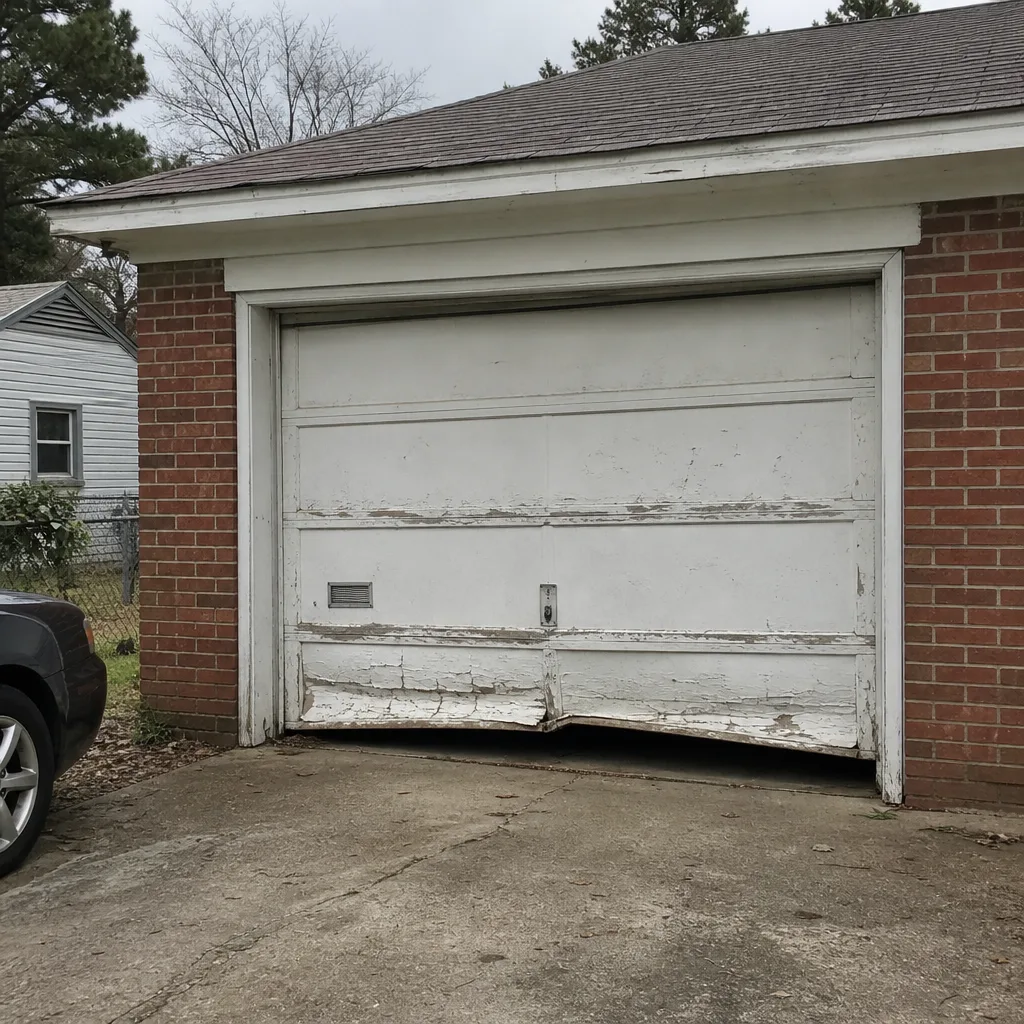 Before
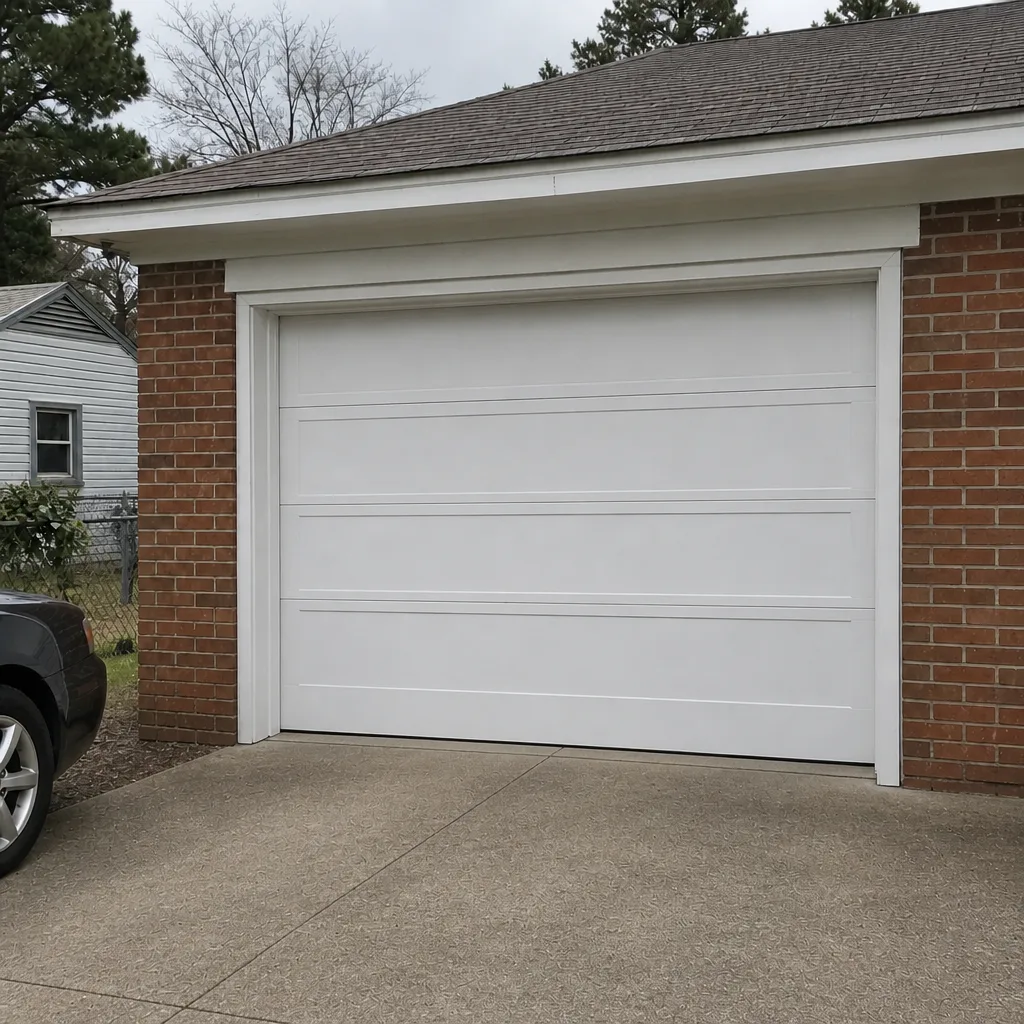 After
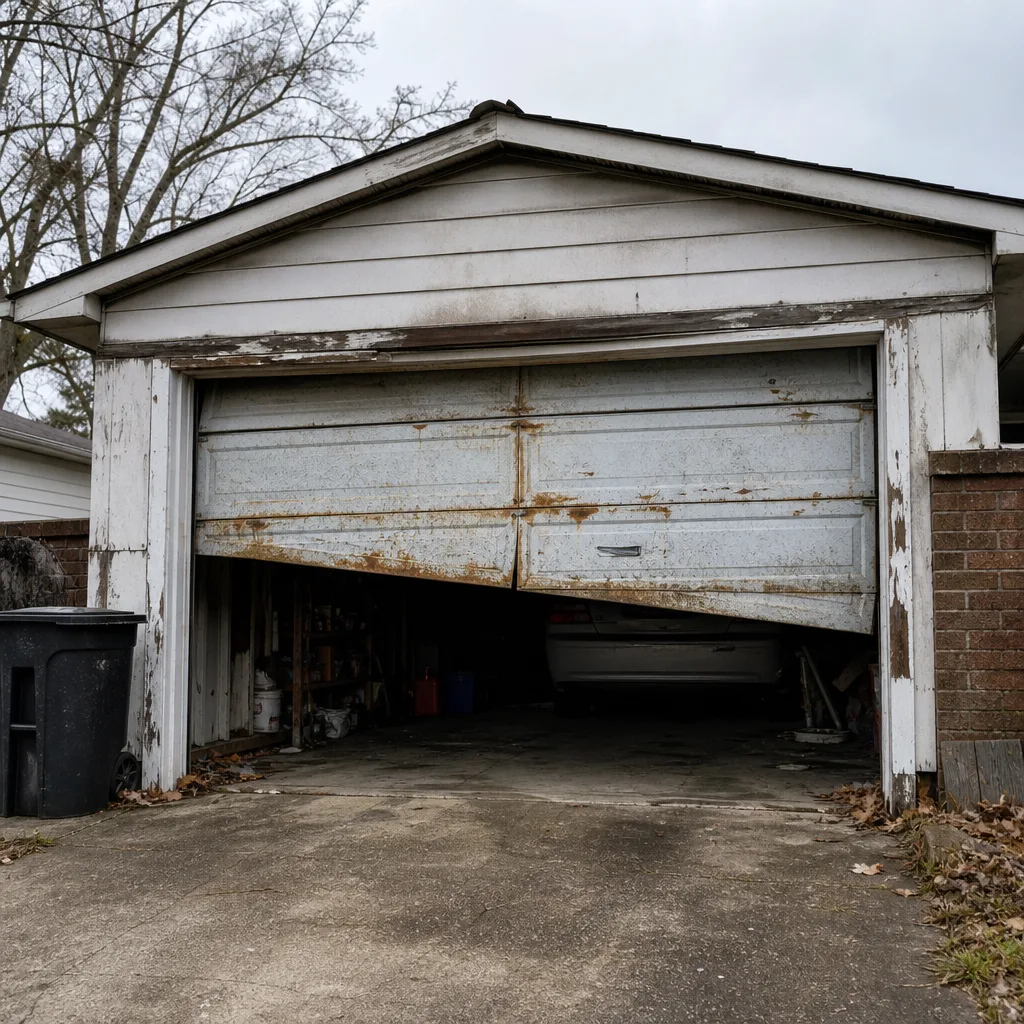 Before
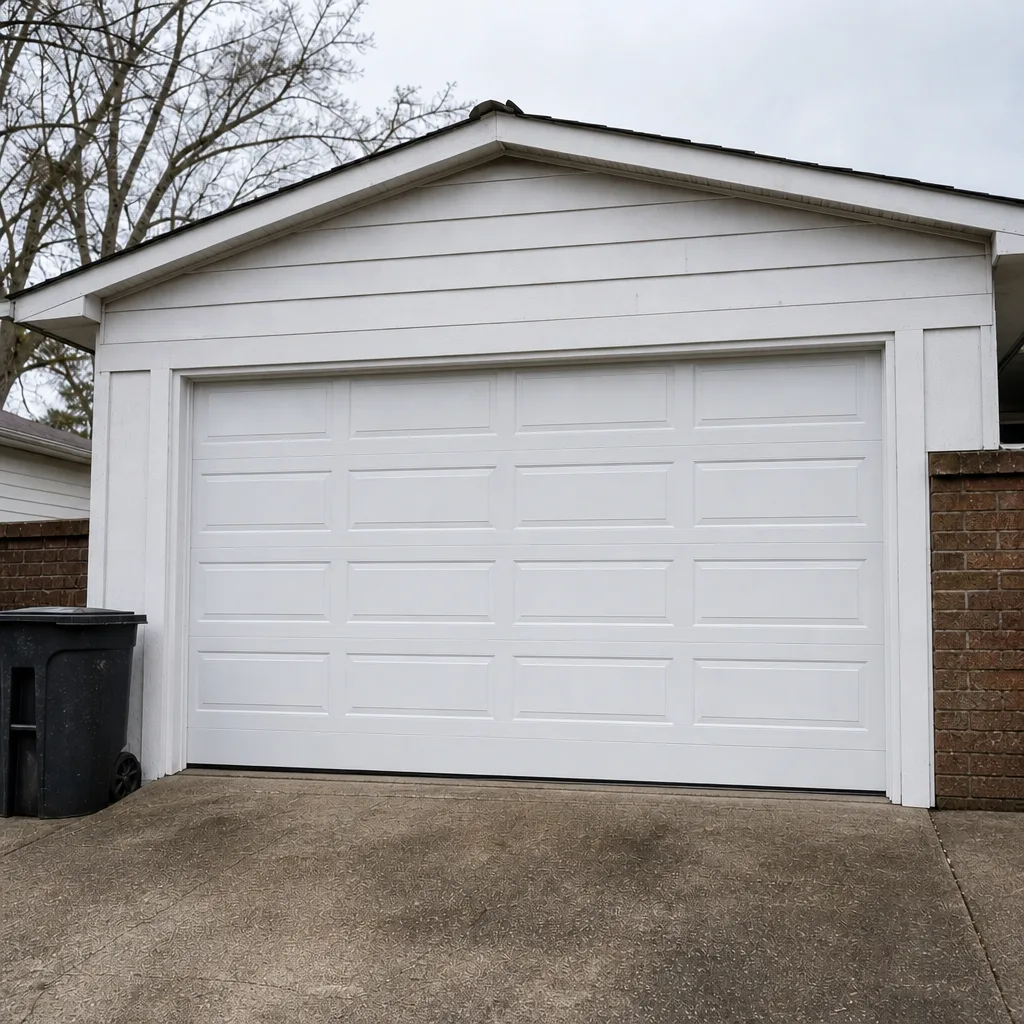 After
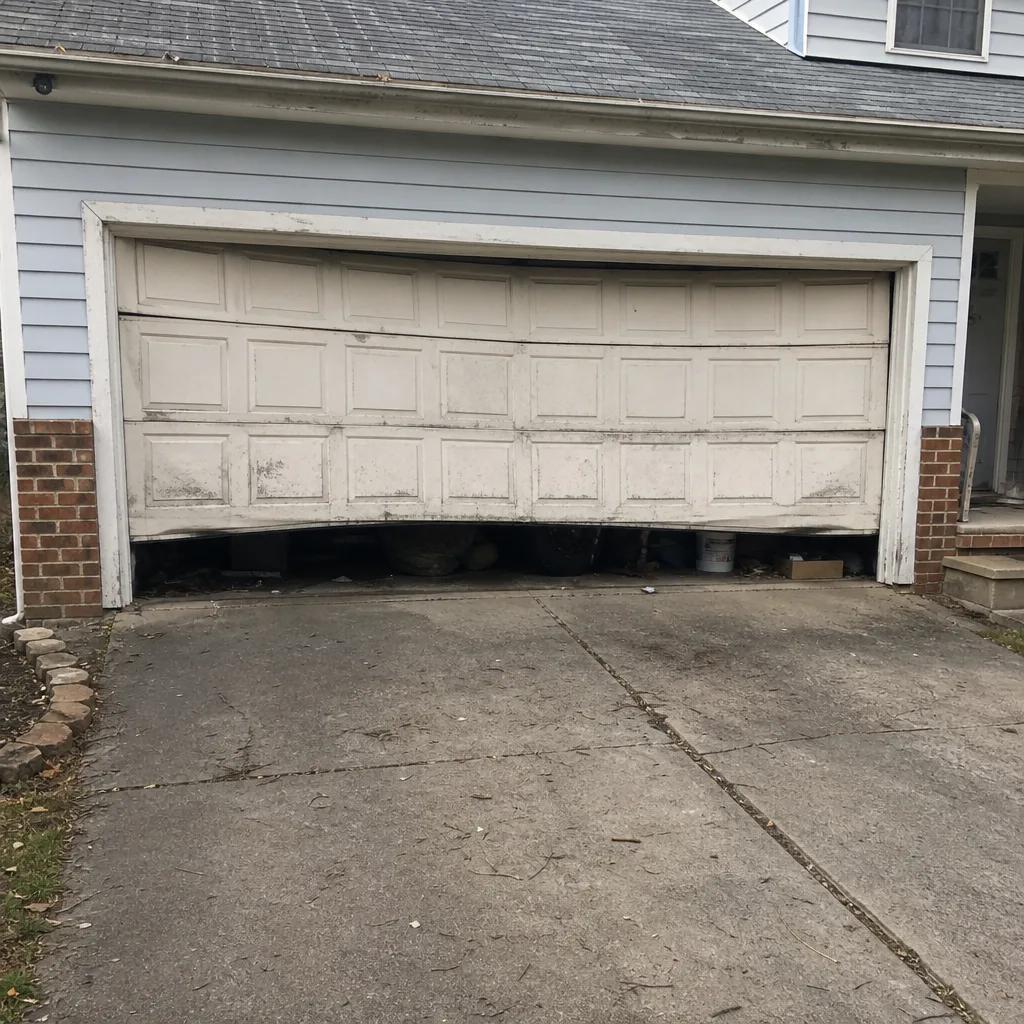 Before
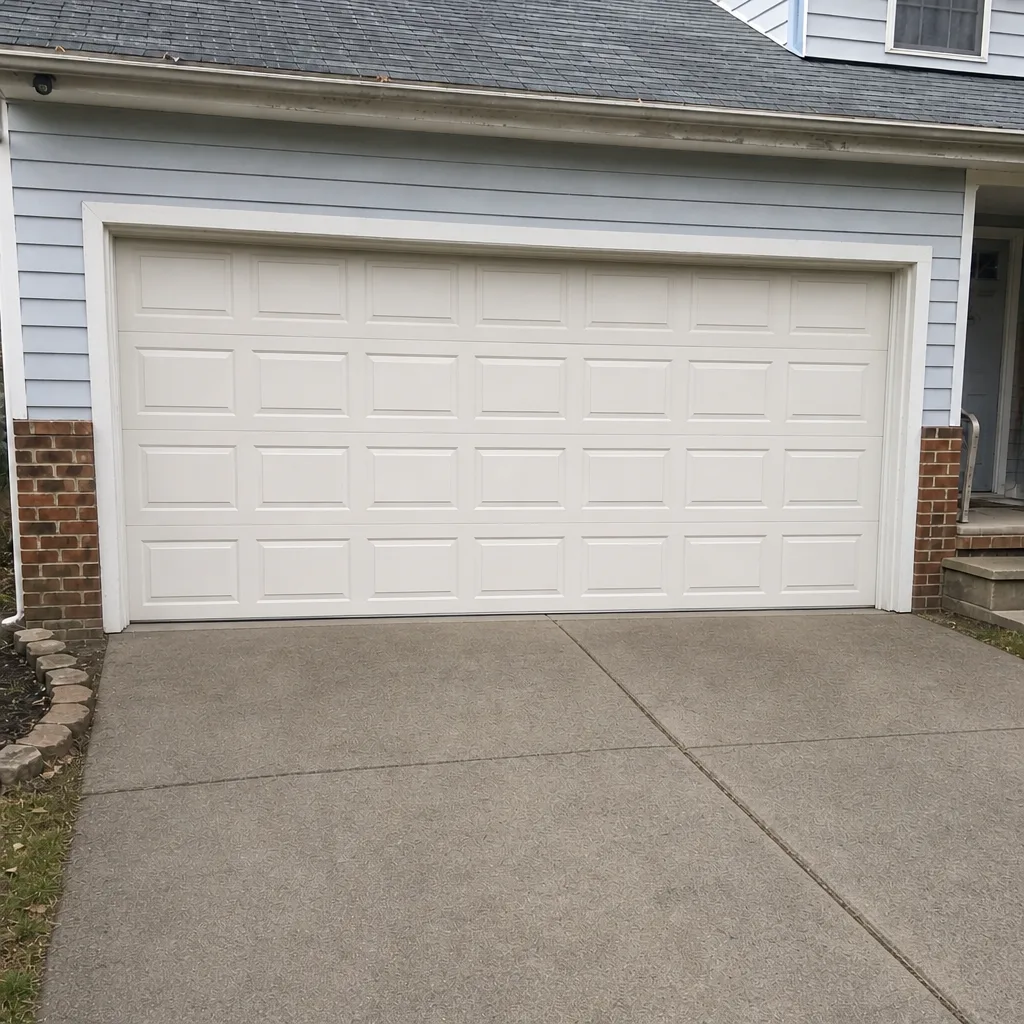 After
Frequently Asked Questions
You open it by hand using the manual release. Pull the release cord hanging from the opener’s trolley straight down, then lift the door slowly. If your door has no walk-in access, use the keyed external release. If the door feels extremely heavy when you lift it, stop – that’s a mechanical failure, not a release problem, and it needs a technician.
No. Garage door springs are under extreme tension, and adjusting or replacing one without training and the right tools can cause serious injury. A broken spring also means the door is no longer properly supported, so don’t operate it. Call a professional. Our technicians have up to 13 years of experience with spring and cable systems and can diagnose the fix safely.
Stop pressing the opener button, check that the tracks are clear and the door isn’t crooked, and pull the manual release. Lift the door by hand to clear the car, then move the car out before you assess further. If the door is crooked or won’t move by hand, leave it and call for repair – forcing it will make the damage worse.
A well-maintained door in good working order handles typical Norfolk wind and rain. The failures that show up in storms are usually pre-existing: a worn seal, a loose track, a spring that was already weak. A pre-storm check of the seal, tracks, safety sensors, and manual release catches most of those in advance. If something turns up, schedule the repair before the system arrives rather than during it.
Tell them your door and opener brand, exactly what the door did, whether a car is trapped, and whether the opener runs at all. Say so first if the door is stuck open. The brand matters because a technician who knows your system arrives with the right parts – we work on your brand, whether it’s a Clopay door, an Amarr panel, or a Craftsman opener.
Same-day service is often possible for repair calls, and we answer the phone around the clock. Call (877) 384-9329. We answer 24/7, and fast dispatch runs from 7am to 7pm, Sunday through Friday. A call outside dispatch hours is booked into the next opening. The price is always quoted and agreed in writing before any work starts, so you know the cost before a technician begins.
The Bottom Line
A garage door emergency in Norfolk is usually a readiness problem in disguise. The door that strands your car, lets water in before a storm, or fails during an evacuation is almost always one that gave warnings nobody checked. Test the manual release, check the seal and tracks before storm season, know which failures you can safely handle and which are strictly professional work, and keep a repair number saved. Springs, cables, and electrical parts are always a call. Seals, sensors, tracks, and release tests are yours. Prepare the basics now and the next storm is a controlled inconvenience instead of a crisis. If something doesn’t look right, call (877) 384-9329 for a free estimate – we answer 24/7. You can learn more about our full range of service at Juniper Garage Door Repair, and if you’re in the area and need a hand, we’re glad to help across Norfolk.
Written by the team at Juniper Garage Door Repair.