
Last updated November 15, 2026
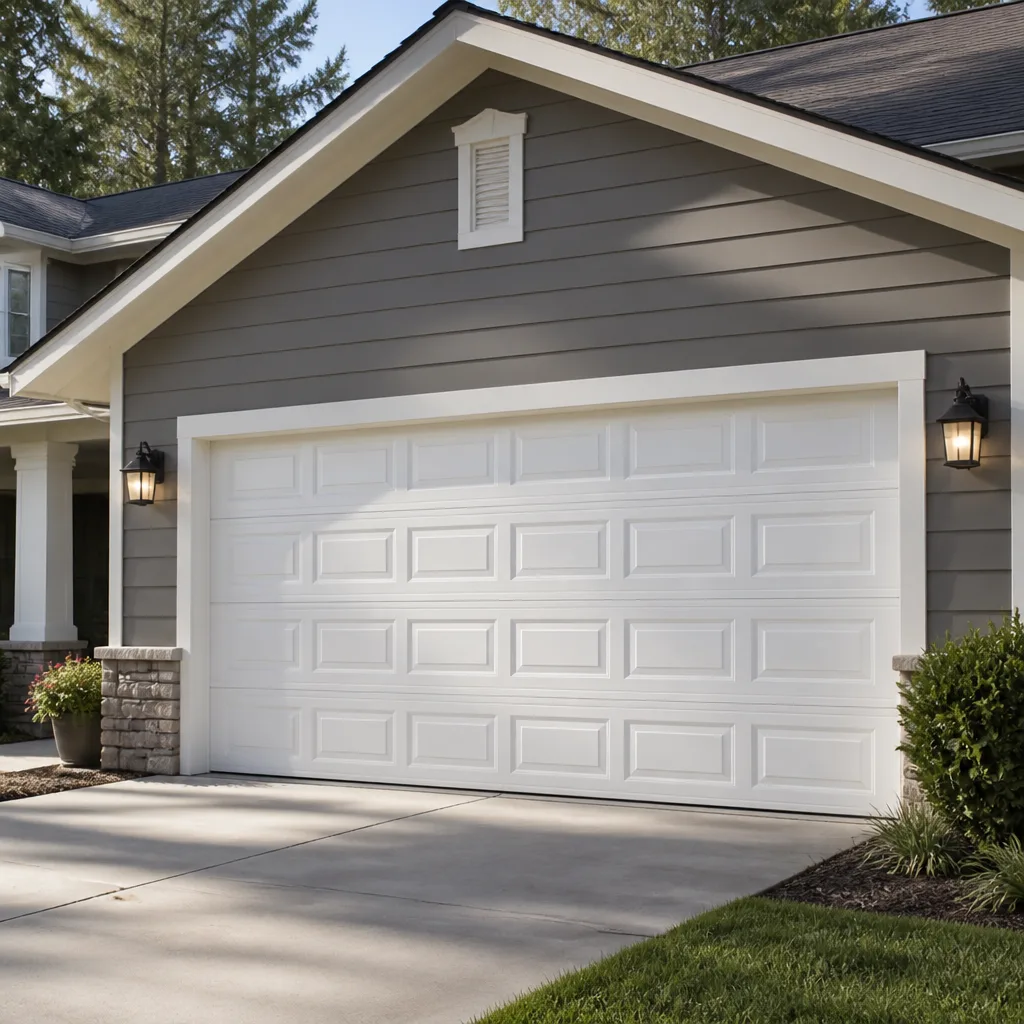 Raised-panel steel
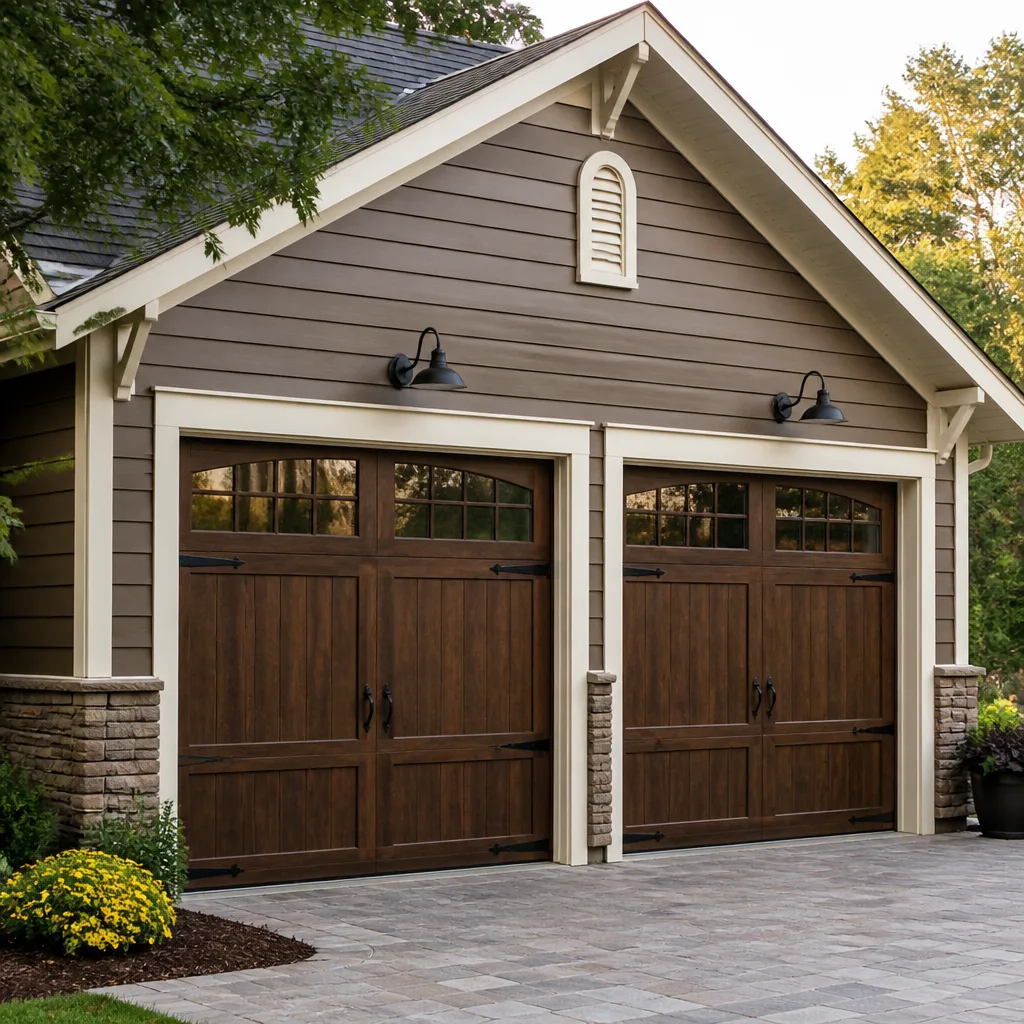 Carriage house
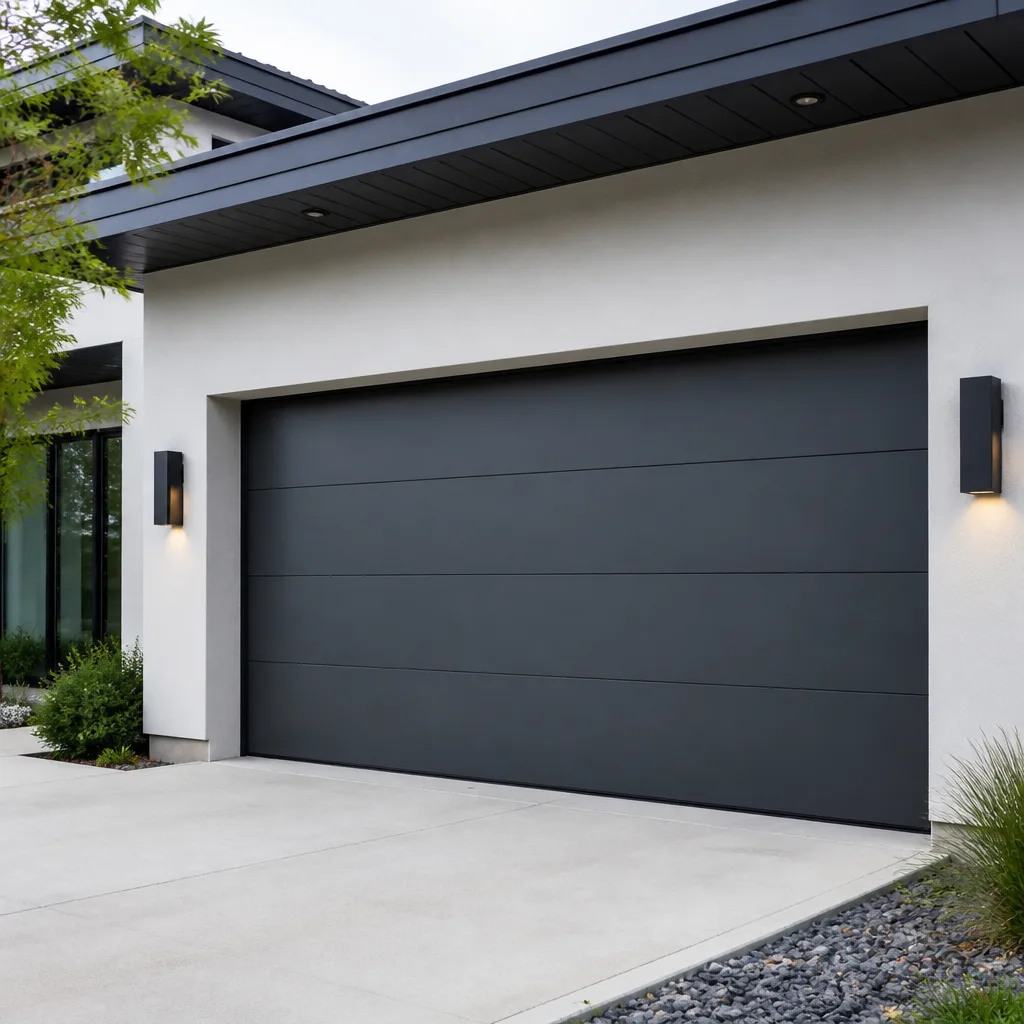 Modern flush
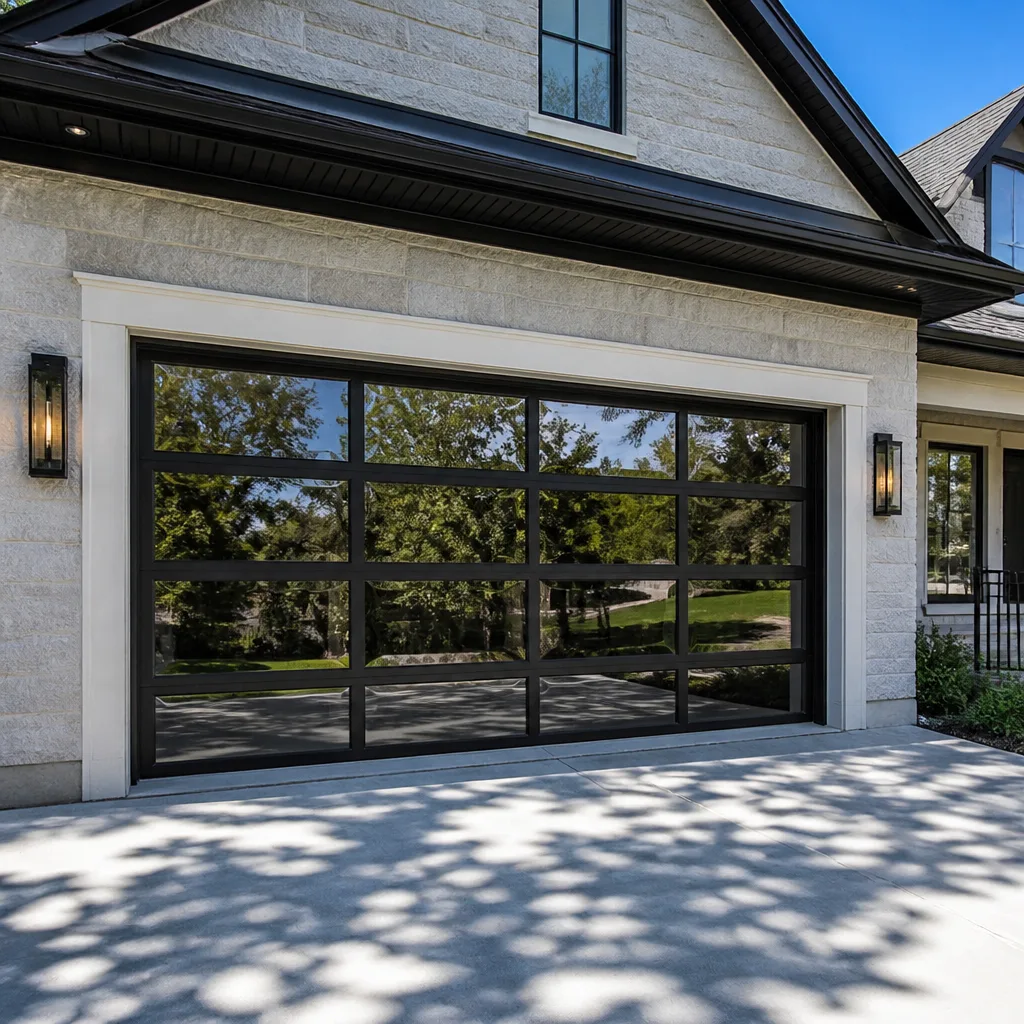 Full-view glass
 LiftMaster openers
 Chamberlain openers
Full 25-point door and opener safety check with every visit - springs, cables, rollers, tracks, and your LiftMaster or Chamberlain opener included
You get a price before we start. It does not change when the pro arrives.
Get your free estimateHow to Hire a Garage Door Contractor in Norfolk: A Step-by-Step Guide
Most homeowners hire a garage door contractor the same way they hire a plumber: something breaks, they call the first number that answers, and they hope for the best. That approach works fine for a clogged drain. It works poorly for a garage door, because the garage door is the largest moving object in most Norfolk homes, and the contractor you choose decides whether you get a targeted repair or a full replacement proposal that was written before anyone looked at your door. The difference usually comes down to a handful of questions, asked before any money changes hands. This guide walks through license checks, insurance verification, the five interview questions that separate diagnosticians from installers, and how to structure a written scope so a warranty dispute never turns into a memory contest. Norfolk specifics included.
Quick Answer
To hire a garage door contractor in Norfolk, verify that the company holds the right Virginia contractor license for the work, confirm both general liability and workers’ compensation coverage, ask whether they diagnose and repair your existing system or default to replacement, and get a written scope of work with itemized parts and labor before work begins. A contractor who resists any of those four steps is telling you something useful. Call (877) 384-9329 for a free estimate. We answer 24/7, with fast dispatch from 7am to 7pm, Sunday through Friday.
Styles & brands we work with
- Raised-panel steel
- Carriage house
- Modern flush
- Full-view glass
- LiftMaster openers
- Chamberlain openers
Table of Contents
- What Virginia Contractor License Does Garage Door Work Require?
- Five Interview Questions That Reveal How a Contractor Thinks
- How to Verify Insurance Beyond “Yes, We’re Insured”
- Red Flags in Garage Door Quotes
- How to Write a Scope of Work That Protects You Later
- What’s Different About Hiring in Norfolk
- Repair or Replace? How to Tell What You Actually Need
- A Step-by-Step Verification Checklist
What Virginia Contractor License Does Garage Door Work Require?
Garage door installation and repair falls under Virginia’s contractor licensing rules, and the license class matters more than most homeowners realize. Virginia issues three classes of contractor license, and which one a company holds tells you the size of jobs it’s certified to take on.
A Class A license covers projects of any dollar value. A Class B license covers single projects below a set threshold, and a Class C license covers smaller projects still. The exact dollar limits are set by the Virginia Department of Professional and Occupational Regulation (DPOR), and they do get adjusted, so the right move is to ask the contractor which class they hold and then confirm it against the current DPOR limits rather than relying on a number you read somewhere. The DPOR maintains a free public license lookup, and it’s worth two minutes of your time.
Here’s what trips people up: not every garage door job requires a licensed contractor. Swapping a remote or adjusting a safety sensor is maintenance, and no license is needed for that. Replacing a torsion spring, rebuilding the track, or installing a new door is construction-adjacent work that generally falls under licensing requirements. If a company can’t tell you its license class and number when you ask, that’s not a small administrative gap. It’s a signal about how the business is run.
For Norfolk homeowners in older neighborhoods like Ghent or Colonial Place, where garages were often added decades after the houses were built, the license question matters even more. Those garages tend to have structural quirks, and a contractor who understands code requirements for the opening and the anchoring is a different animal from one who mostly does new-construction installs in the suburbs.
One more thing: garage door work on residential property in Norfolk may require a building permit depending on scope, particularly for a full door replacement or any change to the opening. Permit rules change, so ask your contractor whether they pull permits for the work being quoted, and confirm with the city’s building department. A contractor who dodges the permit question is a contractor who is comfortable cutting corners.
Five Interview Questions That Reveal How a Contractor Thinks
You can learn more from five questions on the phone than from a glossy website. These are designed to surface a contractor’s default mode: diagnose first, or sell first.
- “Can you describe how you’d figure out why my door is binding before quoting a fix?” A diagnostician will talk about checking the tracks, the rollers, the spring tension, and the door balance. An installer will talk about replacement options. You want the first answer.
- “What brands do you work on?” A company that specializes in one brand will steer you toward that brand whether or not it’s the right fit. Look for a contractor comfortable across the field: Amarr, Wayne Dalton, Craftsman, Raynor, and the rest of the common names. We work on whatever is in your garage, which removes the conflict of interest built into single-brand shops.
- “Do you repair openers, or only doors?” This is the quiet filter. Plenty of door contractors will replace a whole door but won’t touch the opener motor, which means a drive problem sends you hunting for a second company. A contractor who handles openers as well as doors keeps your whole system under one conversation.
- “If the spring is the real problem, will you tell me?” The answer should be some version of “yes, and here’s how we test for it.” If the response is a pitch for a new door, you’ve learned what you needed to know.
- “Will the price on the estimate be the price I pay?” The right answer names the written estimate as the final word, with changes agreed before work continues. Vague answers here tend to become unpleasant surprises on the invoice.
None of these questions require technical knowledge to ask. That’s the point. You’re not testing their trade skill; you’re testing whether they think like someone solving a problem or like someone moving inventory. A contractor who can talk through diagnosis in plain English will usually do the same when the work is underway.
How to Verify Insurance Beyond “Yes, We’re Insured”
“Fully insured” is a phrase every contractor uses and almost none can back up on the spot. The distinction that matters is between general liability and workers’ compensation, because they cover completely different things.
General liability insurance covers damage to your property and injuries to third parties caused by the contractor’s work. If a technician drops a door panel on your car or damages your siding during install, general liability is what pays.
Workers’ compensation insurance covers the contractor’s own employees if they’re injured on your property. This one matters more than most homeowners realize. In Virginia, if an uninsured worker is hurt at your home and the employer doesn’t carry workers’ comp, the liability can land on the property owner. That’s a genuinely bad position to be in, and it’s entirely avoidable.
Here’s how to check:
- Ask for a certificate of insurance and confirm it names both general liability and workers’ compensation.
- Check that the coverage is current, not expired. Certificates have effective dates on them.
- Ask whether the insurance is carried by the company directly or by subcontractors. If subcontractors do the work, you want to know about their coverage too.
- Call the insurer listed on the certificate and confirm the policy is active. It takes five minutes and it’s the only way to know for sure.
A contractor who hesitates, deflects, or promises to “send it later” is a contractor you should keep interviewing others past. Insurance is a basic operational cost of doing business in Virginia, and a legitimate contractor can produce documentation without drama. For work on your property, an insured and bonded contractor is the baseline, not a bonus.
Red Flags in Garage Door Quotes
The quote is where a contractor’s incentives show up in writing. Read it the way you’d read a lease, because the details matter more than the total.
Vague line items
A quote that says “garage door repair: $450” tells you nothing and gives you nothing to hold anyone to. A real quote names the parts (which spring, which roller type, which opener model if one’s involved) and separates parts from labor. If you can’t tell from the quote what’s being fixed, the contractor either doesn’t know or doesn’t want you to.
Brand exclusivity language
If every quote you get from a company pushes the same brand regardless of what’s in your garage, you’re looking at a shop with a brand relationship, not a service business. That’s not automatically dishonest, but it does mean the recommendation might serve the company’s margin more than your door. A brand-agnostic contractor is free to tell you the truth about your existing system, even when the truth is “this just needs a new spring.”
“Today only” pricing pressure
Legitimate garage door work doesn’t come with an expiration timer that forces a decision in your driveway. If a contractor uses pressure tactics to get you to sign on the spot, the deal gets better when you don’t. Ask for the quote in writing and take a day to read it. A contractor who won’t let you do that is telling you something.
Replacement-first proposals
The most common pattern behind high-volume installer complaints is a quote that jumps straight to a full door replacement when the actual fix is mechanical. Springs, rollers, tracks, cables, and openers are all serviceable parts, and replacement is only the right call when the panels are structurally compromised or the economics truly favor it. Ask why replacement beats repair, and listen for an answer that references your specific door, not a sales script.
No written scope at all
A verbal quote is not a quote. If the number lives only in the air, it changes the moment the work starts. Insist on paper.
How to Write a Scope of Work That Protects You Later
Warranty disputes almost always come down to the same failure: nobody wrote down exactly what was going to be done, so months later the contractor’s memory and yours disagree. A written scope solves that before it starts.
You don’t have to draft it from scratch. Ask the contractor to provide it, and check that it includes the following:
- The specific parts being replaced or installed, with brand and model where relevant.
- What’s being left in place. If the existing opener stays, say so. If the tracks are staying, say so. That detail prevents disputes about what “repair” covered.
- Labor scope. What’s included, and what would count as a separate job.
- The total price, with parts and labor broken out. The written estimate is the price. Any change should require a conversation before the work continues.
- Warranty terms. What’s covered, for how long, and what isn’t. Parts warranties and labor warranties are usually different, and you should know both.
- Permit responsibility. If a permit is required, who pulls it.
- A line for both signatures. A scope both parties sign is the cheapest insurance you’ll ever buy.
This is where we tell homeowners to be persistent. A contractor who can’t produce a written scope isn’t being lazy; they’re telling you they prefer ambiguity. For a repair like a spring replacement, the scope should be short and specific. For a full installation, it should be detailed enough that you know exactly what door, what opener, and what hardware are going in before anything is ordered.
What’s Different About Hiring in Norfolk
Hiring in Norfolk has a few local accents that don’t apply everywhere. The housing stock is one. A significant share of the city’s homes date to the mid-20th century or earlier, and garages in those neighborhoods range from the original single-bay kind to added structures built against later additions. Older garages often have openings that aren’t perfectly square, tracks that have settled, or door hardware that was replaced piecemeal over the years. A contractor who works mostly in new construction will find those jobs unfamiliar, and unfamiliarity costs you time.
The climate is another factor. Norfolk’s humid summers and the freeze-thaw cycles that show up most winters put real wear on springs, and they accelerate rust on tracks and hinges. If a door is binding or noisy in late winter, it’s often the hardware responding to temperature rather than a mysterious failure. A contractor who works in Norfolk regularly will recognize the seasonal patterns and quote the actual fix.
Permitting is the third. The city’s building department has its own process, and whether a given job requires a permit depends on scope. Rather than assume, ask the contractor what the current rules are for the work being quoted, and confirm with the city directly. That’s not a sign of distrust; it’s the responsible way to handle any construction-adjacent work on your property.
Finally, the market itself. Norfolk has plenty of garage door companies, and a lot of them are high-volume install operations that treat repair as a customer-acquisition step. That’s the main reason this guide exists as a filter. A contractor who leads with diagnosis and quotes repair honestly is the one worth calling back, and there are good ones in the city.
Repair or Replace? How to Tell What You Actually Need
This is the single question that decides most of a garage door quote, and it’s the one homeowners are least equipped to answer on their own. The good news is that the criteria are reasonably consistent.
Repair is usually the right call when:
- The door is binding, squeaking, or moving unevenly and the panels themselves are sound.
- A spring has failed. Springs are consumable parts, and replacing one is a normal service, not a sign the door is done.
- Rollers, hinges, or cables have worn out while the door panels and frame are intact.
- The opener has failed but the door hardware is in good condition. That’s a garage door opener repair job, not a door replacement.
Replacement starts to make sense when:
- Multiple panels are dented or structurally compromised, especially after storm or impact damage.
- The door is so out of alignment that repeated repairs aren’t holding.
- You’re changing the type of door entirely (for example, from a manual to an opener-driven door) and the existing hardware won’t support it.
- The economics genuinely favor a new door over the cumulative cost of ongoing repairs.
Here’s the piece most quotes skip: garage door panels, springs, tracks, and openers are all serviceable. A contractor who’s comfortable with the full system has no reason to push a replacement that isn’t needed. A contractor who only sells installed doors has every reason to. Ask directly, and expect a reasoned answer either way. For routine repair work, our garage door repair service starts with diagnosis for exactly this reason.
A Step-by-Step Verification Checklist
Here’s the whole guide compressed into a sequence you can run through in an evening.
- Check the license. Look up the contractor on the Virginia DPOR public database. Confirm the license class, the current status, and the company name matches.
- Request the certificate of insurance. Confirm general liability and workers’ compensation are both listed and current. Call the insurer if you want certainty.
- Ask the five interview questions. The answers tell you whether the contractor diagnoses or defaults to replacement.
- Ask for a written quote. Itemized parts and labor, no verbal estimates, no “today only” pressure.
- Get a written scope of work. Both parties sign it. It’s your protection against warranty disputes.
- Confirm the permit question. Ask whether a permit is required for the specific job and who pulls it.
- Ask what happens if the estimate changes once the work starts. The written estimate is the price. Any change should be discussed and agreed before work continues.
Run through those seven steps and you’ve eliminated the high-volume installers who were never going to give you an honest answer. What’s left is a shortlist of contractors worth calling back. If you’d rather skip the search entirely, we work on the brands that are actually in Norfolk garages – Amarr, Wayne Dalton, Craftsman, Raynor and the rest – and we diagnose before we quote. Call (877) 384-9329 for a free estimate.
Common Mistakes to Avoid
- Hiring the first company that answers. Speed to answer is not a measure of quality, and high-volume operations are often the fastest to pick up. Get quotes from more than one contractor, even if it takes an extra call.
- Skipping the DPOR lookup. Virginia maintains a free public license database, and checking it takes two minutes. Skipping it is how homeowners end up with unlicensed work on their property.
- Accepting “fully insured” without a certificate. The phrase means nothing without documentation. Ask for the certificate, confirm both general liability and workers’ comp, and call the insurer if you’re unsure.
- Letting a quote jump to replacement. If the first proposal is a new door when something mechanical is failing, ask why. Springs, rollers, cables, and openers are all fixable, and Norfolk’s older garages usually only need the mechanical fix.
- Signing without a written scope. A verbal quote isn’t a contract. Get the specific parts, labor scope, and warranty terms in writing and signed before work starts.
- Ignoring brand bias in the quote. If every contractor you talk to quotes the same brand regardless of what’s in your garage, that’s a business relationship speaking, not a diagnosis.
- Confusing “same-day” with “better.” Speed matters for a repair, but a contractor who rushes the quote to beat the competition may rush the diagnosis too. Give the estimate the time it deserves.
See the difference
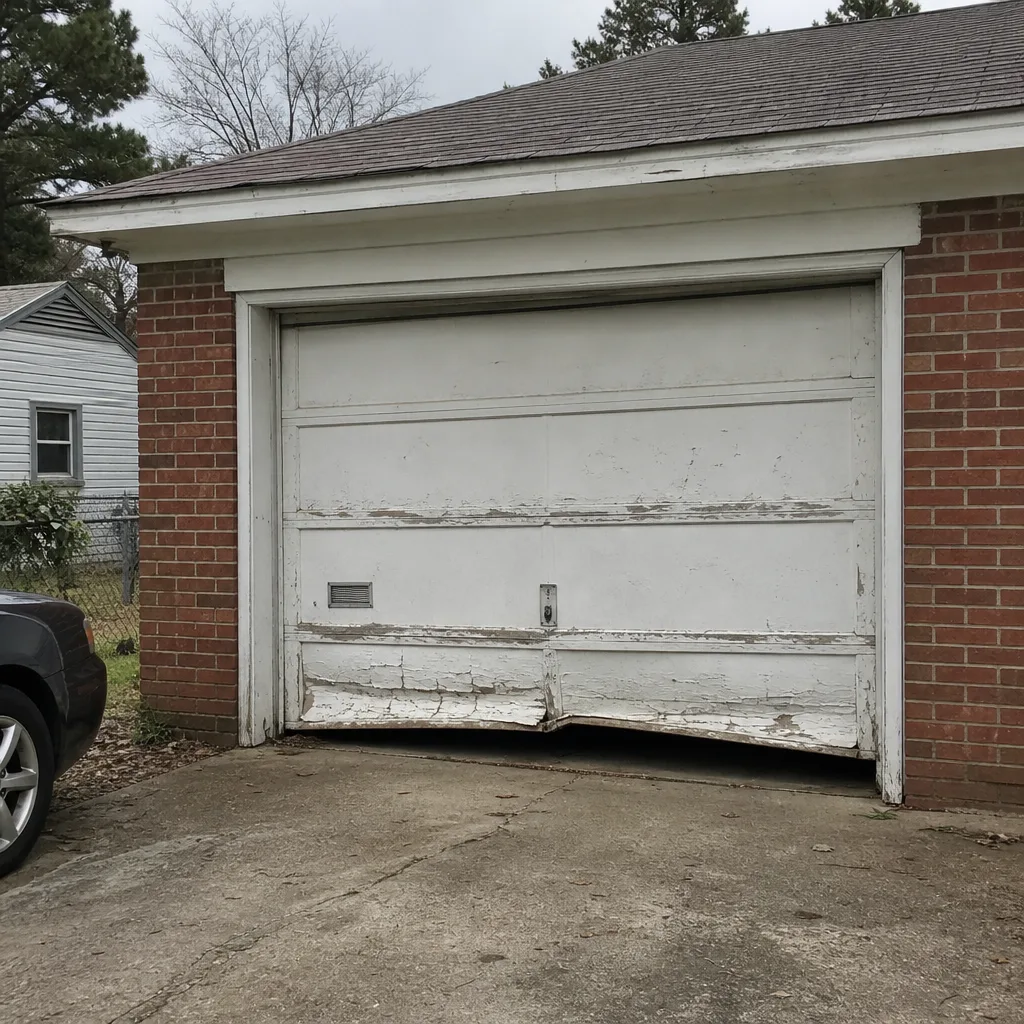 Before
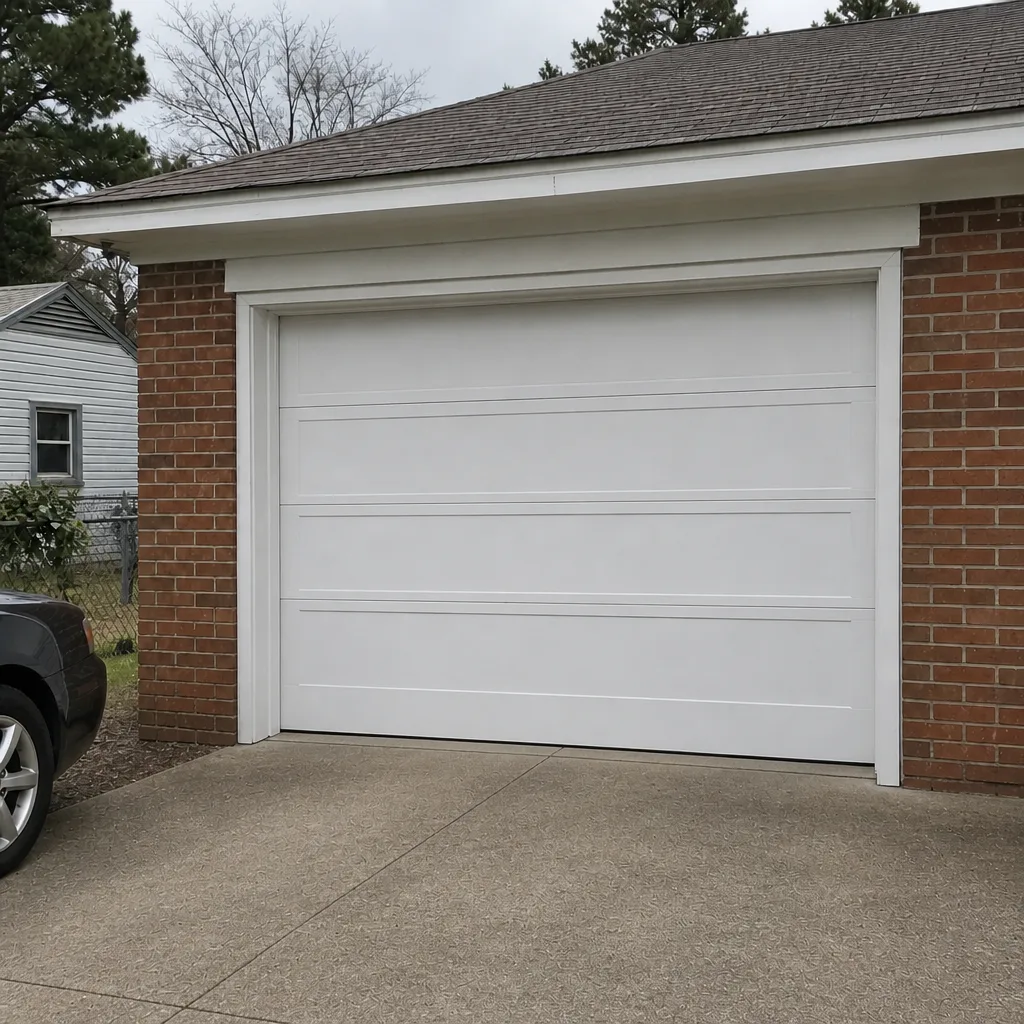 After
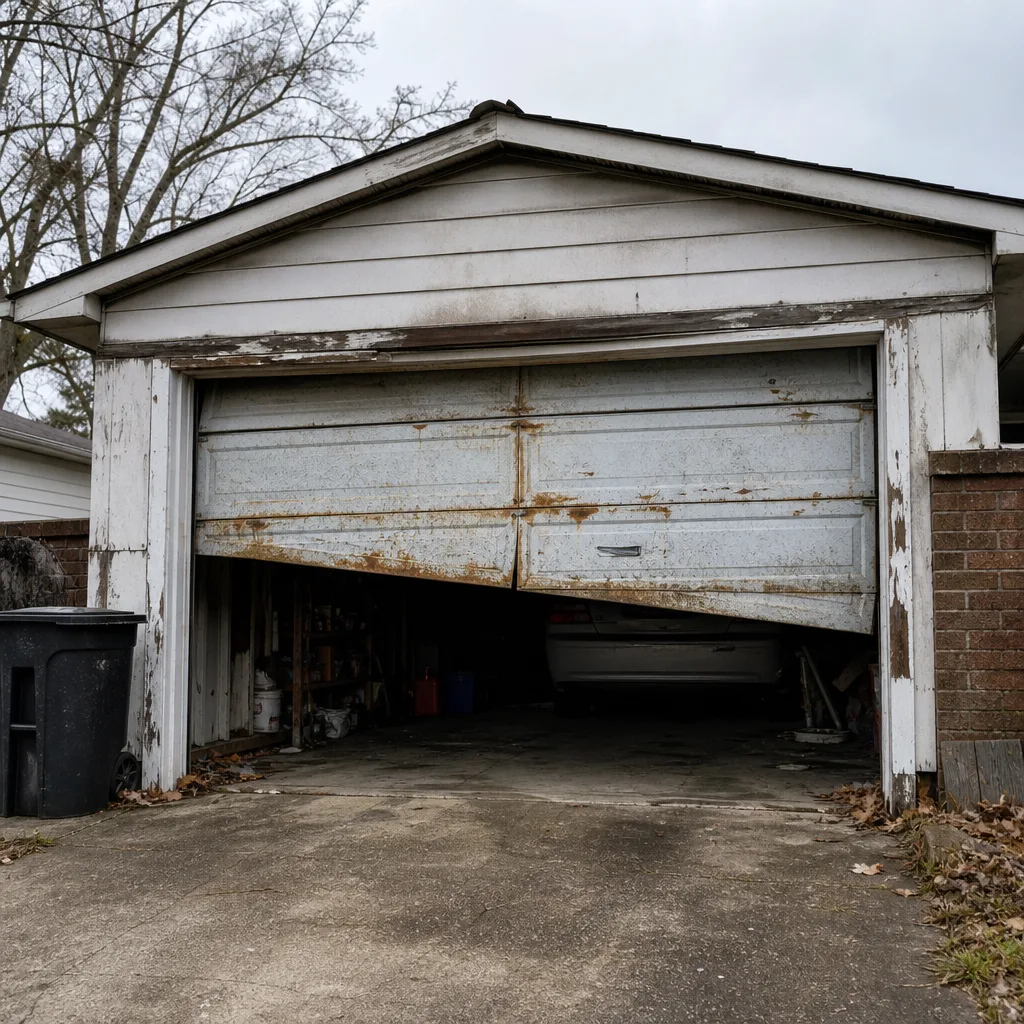 Before
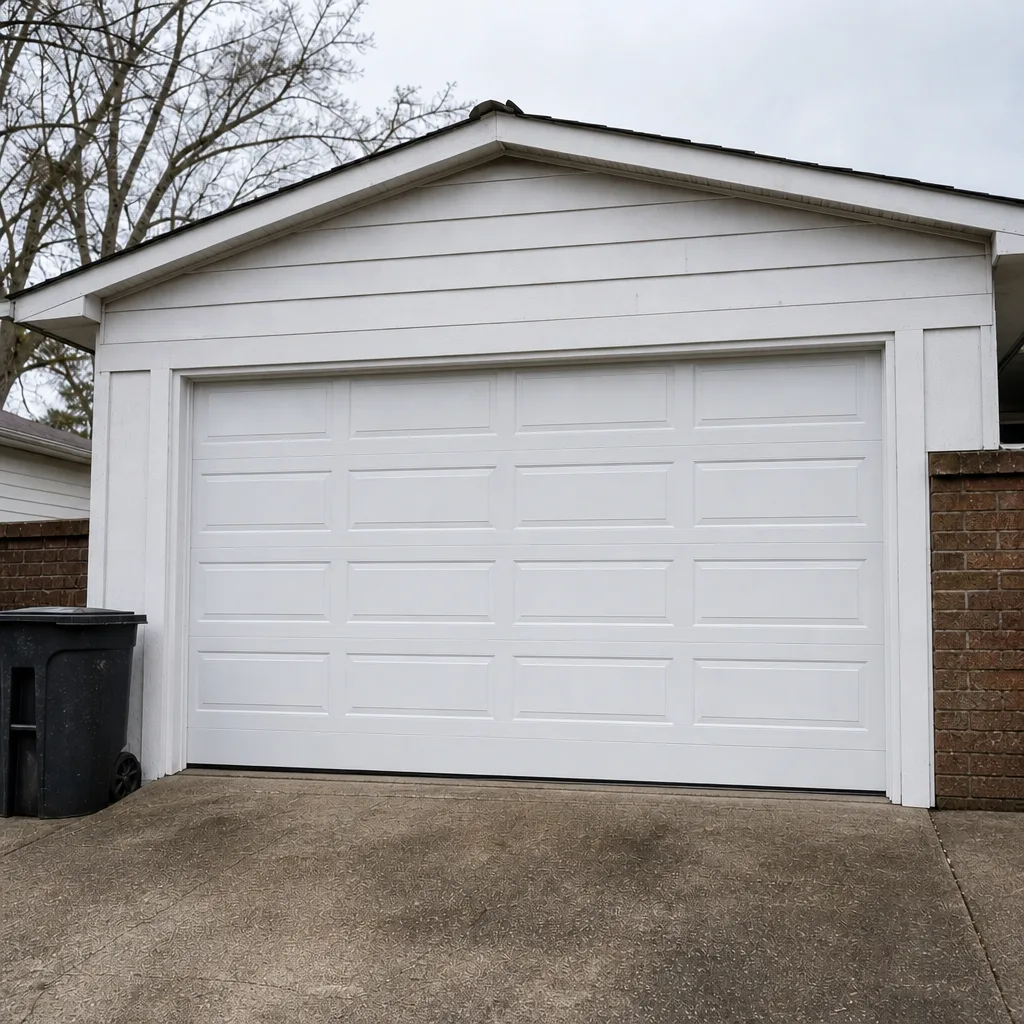 After
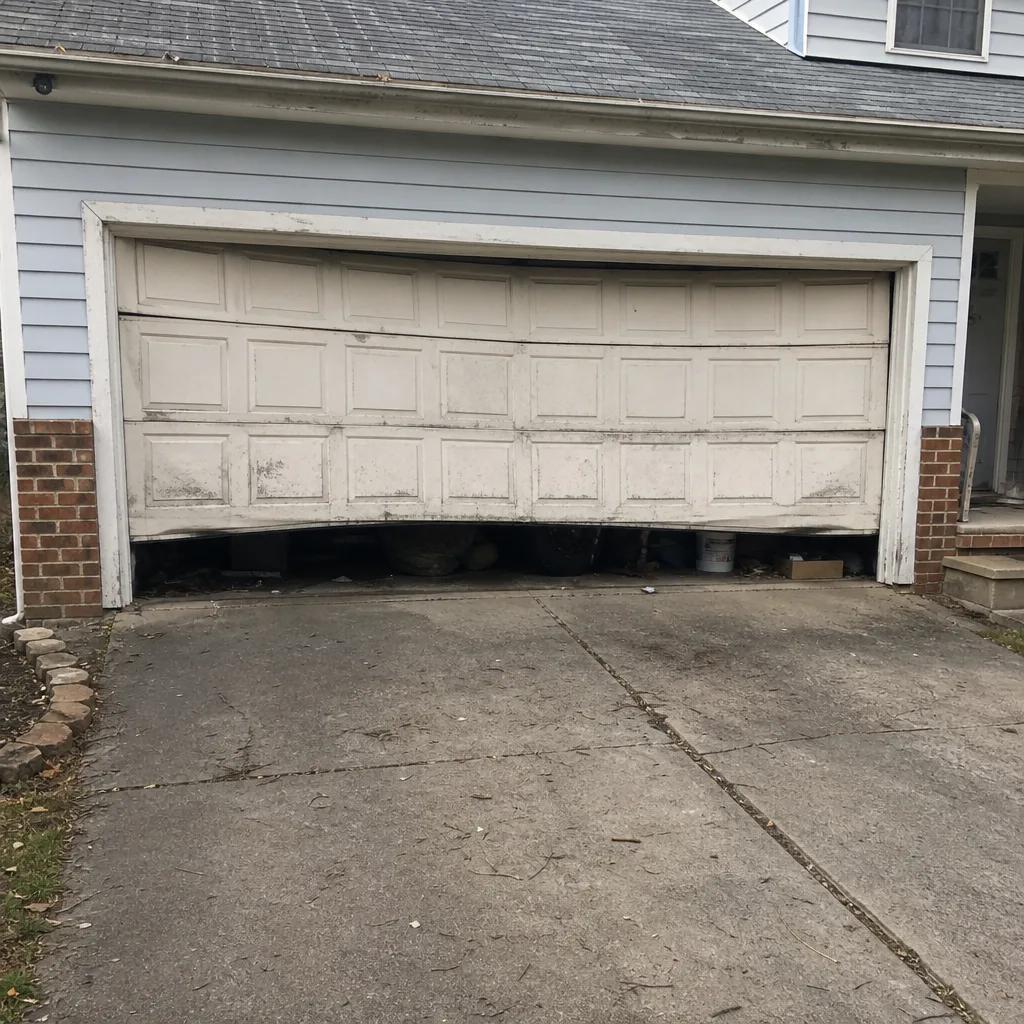 Before
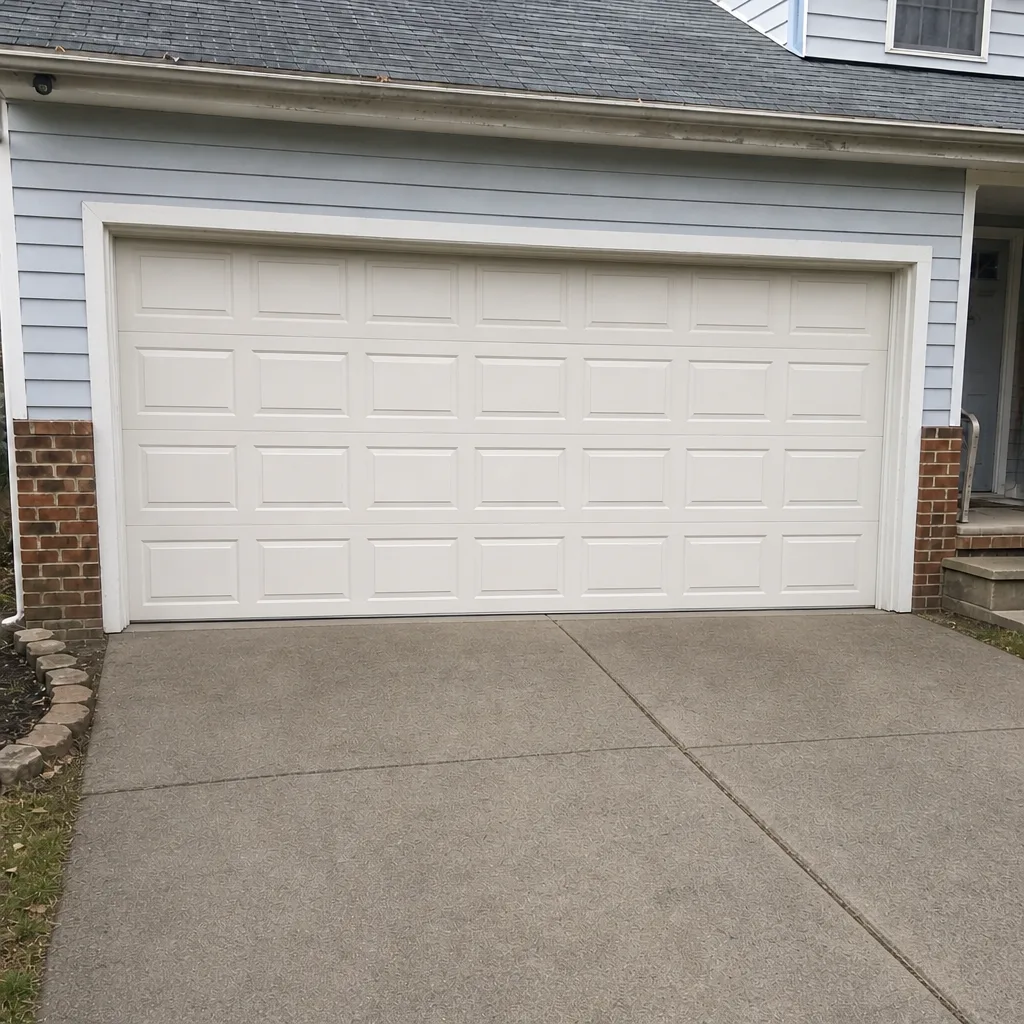 After
When to Call a Professional
Some garage door issues are genuinely do-it-yourself: a remote that’s lost its pairing, a sensor knocked out of alignment, or a door that needs a little lubricant on the hinges and rollers. Most aren’t. Torsion springs are under dangerous tension and can cause serious injury if handled incorrectly; cables and the door’s counterbalance system carry similar risk, and the tools and technique for adjusting them are not household items. If your door is off its track, if the spring has broken, if the door is moving unevenly or won’t stay balanced halfway, or if the opener motor is straining, call a trained professional rather than working around it. Electrical work on the opener or the wall console belongs to a technician as well.
For those repairs and for any full installation, Juniper Garage Door Repair offers free estimates in Norfolk. Call (877) 384-9329. We answer 24/7, with fast dispatch from 7am to 7pm, Sunday through Friday. The price is quoted and agreed before any work starts.
Frequently Asked Questions
Look up the contractor on the Virginia DPOR public license database and confirm the license class, the current status, and the company name matches. Ask the contractor directly which class they hold, and confirm the current DPOR limits for that class rather than relying on a number someone quoted you. Call (877) 384-9329 for a free estimate. We answer 24/7, with fast dispatch from 7am to 7pm, Sunday through Friday.
General liability covers damage to your property or injuries to third parties caused by the contractor’s work, while workers’ compensation covers the contractor’s own employees if they’re injured at your home. If a worker is hurt on your property and the company doesn’t carry workers’ comp, the liability can land on you. Ask for a certificate of insurance that names both, and confirm the policy is current. Call us at (877) 384-9329 for an exact quote – estimates are free.
Repair is usually the right choice when the panels are sound and the problem is mechanical – a broken spring, worn rollers, or a failed opener. Replacement makes sense when multiple panels are structurally compromised or the door is so out of alignment that repairs don’t hold. Ask the contractor why replacement beats repair and listen for an answer that references your specific door. For a diagnosis and a written estimate, call (877) 384-9329.
Norfolk garages carry a wide mix. Amarr, Wayne Dalton, Craftsman, and Raynor doors and openers are all common in the area, alongside LiftMaster, Chamberlain, Genie, and Clopay systems. A contractor who works across the field can diagnose your existing door without steering you toward a brand. We’re familiar with all eight of those names and diagnose before we quote. Call (877) 384-9329. We answer 24/7, with fast dispatch from 7am to 7pm, Sunday through Friday.
No. The written estimate is the price. If something unexpected turns up once the door is opened and examined, the contractor should stop, explain the situation, and agree any change with you before work continues. A quote that turns into a different number after the truck rolls up is a quote that wasn’t itemized properly in the first place. Call (877) 384-9329 for a free estimate.
It depends on scope. A simple repair usually doesn’t require one, while a full door replacement or any change to the opening may. Rather than guess, ask the contractor directly and confirm with the city’s building department – permit rules change and the department’s current guidance is the only reliable answer. A contractor who pulls permits when required is a contractor who expects the work to hold up. Call (877) 384-9329 for a free estimate.
The Bottom Line
Hiring a garage door contractor in Norfolk comes down to filtering for incentives. A contractor who diagnoses first and quotes repair honestly is a different business from a high-volume installer whose quotes default to replacement. The filter is simple: verify the license, confirm both kinds of insurance, ask whether they diagnose before they quote, and get a written scope of work that both parties sign. Run those four checks and the high-volume installers drop out on their own. The contractor left standing is the one worth calling back. For a free estimate, reach out to Juniper Garage Door Repair at (877) 384-9329. We answer 24/7, with fast dispatch from 7am to 7pm, Sunday through Friday, and our technicians have up to 13 years of experience.
Written by the team at Juniper Garage Door Repair.